
Aviation
Historical Society of Australia(NSW)inc
Air Mail Centenary Commemoration Group
Maurice
Guillaux in Harden: some preliminary
notes
July
16-18 1914
Never heard of Maurice Guillaux?
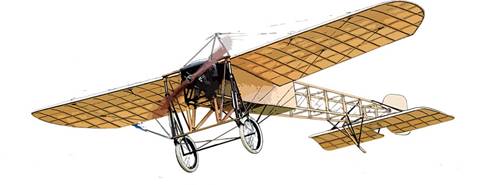 The French aviator Maurice Guillaux
spent less than 200 days in Australia, April-October 1914, but had a great
influence on Australian aviation.
The French aviator Maurice Guillaux
spent less than 200 days in Australia, April-October 1914, but had a great
influence on Australian aviation.
His Bleriot
XI aircraft was specially modified for aerobatics, and he gave spectacular
aerobatic performances in Sydney, Newcastle, Wagga Wagga,
Albury, Melbourne, Bendigo, Ballarat, Adelaide, Geelong and Bathurst. He was
the first person in Australia to fly a seaplane in Australia when he flew
Lebbeus Hordern’s Farman ‘hydro-aeroplane’ at Double Bay, Sydney, 8 May, 1914.
He made
several record-breaking flights, but his major feat occurred on 16 to 18 July
when he flew from Melbourne to Sydney. The journey took 2 days, 5 hours and 43
minutes, and he carried Australia’s first air mail and air freight. However two
weeks later, World War I broke out, and Guillaux’ epic feat was largely lost to
historic memory.
The Aviation Historical Society of
Australia, NSW (inc) is co-ordinating a re-enactment
flight which will occur on 12-14 July next year. Now read on....
Harden played a big part in the original mail flight. These
reports of his visit to Harden have been culled from current newspapers that
have been digitised, and also from Nelson Eustis’ 1964 booklet 50 Years of Australian Air Mails. More
material has been received from the Harden-Murrumburrah
Express, retrieved by the energetic local Historical Society. We are
wondering if there is local knowledge to add to what we have gathered; there
are no photos in the major archives of Guillaux at Harden.
Wagga to Harden, 16 July
1914
![Darge, Algernon, 1878-1941. Maurice Guillaux in his Bleriot XI monoplane holding aerial mail bag at the Agricultural Society's show grounds before flying to Sydney on first air mail delivery, Melbourne, 16 July 1914 [picture]](09%20Harden_files/image006.jpg) On the original flight Guillaux had a very good first day. Leaving
Melbourne Showground at 9 12 am (picture above) he had flown 353 miles to reach
Harden by 4 06 pm. He had stopped at Seymour (Sisely’s
paddock), Wangaratta (Jordan’s paddock), Albury racecourse, Wagga Wagga racecourse and then on to Harden.
On the original flight Guillaux had a very good first day. Leaving
Melbourne Showground at 9 12 am (picture above) he had flown 353 miles to reach
Harden by 4 06 pm. He had stopped at Seymour (Sisely’s
paddock), Wangaratta (Jordan’s paddock), Albury racecourse, Wagga Wagga racecourse and then on to Harden.
Before leaving Wagga Wagga, he
was handed several additional letters to drop off at towns on the route. The
weather was fine at Wagga Wagga, and he left at 3 30, arriving at Harden at 4 06
pm..
Guillaux was due to give an exhibition at Harden, but with
the weather still favourable and a good tail wind he decided to go on to
Goulburn, 94 miles away, expecting to land before darkness.
Three miles out of Harden, Guillaux says he encountered a
strong head wind, and fearing that he would not reach Goulburn before dark he
returned to Harden for the night.
The Wagga Wagga Express said that
he was afraid he would run short of petrol, and would not be able to land in
the mountains. Nelson Eustis says that this delay prevented Guillaux from
flying into Sydney early on Friday morning but there is conflicting evidence
that in any case he intended to give a display in Goulburn and arrive in Sydney
on the Saturday.
He spent the night at the Carrington Hotel. Local identity,
Mr R J Simpson tells that the plane appeared ‘to be a mass of wires,’ that
townspeople flocked to the racecourse and a police guard was placed on the
Bleriot overnight. However the Goulburn Post
noted that when the aircraft arrived, there were lots of pencilled messages
on it from the people of Harden, so the aircraft must have been readily
accessible to them.
Friday dawned cold and wet in Harden, but despite the
weather Guillaux gave an aerobatic display. He apologised for not looping the
loop because he did not have the braces that held him in the machine, but
somehow he made room for a passenger, and three Harden residents were taken for
flights.
Harden: abortive departure
for Goulburn, July 17
Lucien Maistre, Guillaux's representative
at Goulburn, phoned continuously during the morning reporting extremely bad
weather. Although his agent begged him not to take off, he took off at 2 p.m.
This stage to Goulburn was 94 miles, but Guillaux battling against a headwind
did not get very far.
Over Galong, 20 miles away, cold wind and heavy rain were
causing very poor conditions, and the aircraft was only averaging only 40 mph
so Guillaux was forced to return and spend another night in Harden. Guillaux,
recalling later this night at Harden said, ‘I had a lonely feeling and was
worrying about getting away next day’.
Harden to Goulburn on July
18
The flight to Goulburn was indeed difficult, as is
evidenced by the speed. The 94 miles took two hours, indicating a strong
headwind. Conditions were freezing. The land beneath the aircraft was rugged;
it would have been far more heavily timbered than at present. Guillaux later is
quoted as saying ‘I shall never forget the awful experience I had to undergo.
As soon as I rose I had to battle my way and had to negotiate a passage through
the icy atmosphere above those cruel mountains. Never have I seen such an
inhospitable region as this. The deep yawning chasms seemed to be calling me
down into the merciless depths never to rise again. There is no place to land
in this awful mountain country. If I had any motor troubles it would have been
`good-bye' because there were only eucalyptus trees to land upon.’ Guillaux
went on to say that although the railway lines were impossible to follow, it
was the smoke from the engine that helped guide him to Goulburn.
At 9.15 am he landed and hurried to the signal fire to get
warm. Those of us who have experienced the bitter cold of Goulburn winter
mornings can sympathise with him. But at last he had left Harden and was on
target to arrive in Sydney on the Saturday afternoon.
The Goulburn newspaper covered the event comprehensively with
stories` of his non-arrival on July 17 and his arrival
on July 18. The July 21 issue carried a report of his arrival in Sydney. But there is not much coverage of Guillaux’ time in
Harden, and it is hoped that the centenary re-enactment may bring more
information, and particularly photographs, to light.
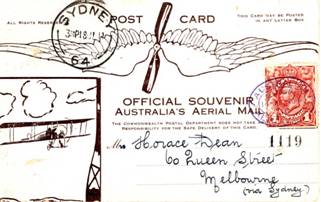 A re-enactment of Guillaux’ mail flight will take place on July 12-14
2014, between Melbourne and Sydney, using a Jabiru, a modern Australian lightweight
sports aircraft of similar weight and engine capacity to Guillaux’ Bleriot. It
will carry exactly 1785 postcards, the same number as was carried on the
original flight and based on the originals. These unique philatelic items can
be purchased from the website.
A re-enactment of Guillaux’ mail flight will take place on July 12-14
2014, between Melbourne and Sydney, using a Jabiru, a modern Australian lightweight
sports aircraft of similar weight and engine capacity to Guillaux’ Bleriot. It
will carry exactly 1785 postcards, the same number as was carried on the
original flight and based on the originals. These unique philatelic items can
be purchased from the website.
The Jabiru will be accompanied by other aircraft and will
follow the route pioneered by Guillaux, with major celebrations at each stop. It
is due at Harden on Sunday 13 July 2014 and will stay overnight before flying
on to Goulburn. Harden people are preparing a wonderful reception for the
flight: to find out more, go to www.australiasfirstairmail.com .
Are you a light aircraft owner who would like to join the flight? If you would like to take part in the commemorations, or you would like to help in any way, please email guillauxcentenary@gmail.com .
Tom Lockley, PO
Box 301, Pyrmont NSW 2009, co-ordinator, 0403 615134,