Australia’s Second Air Mail
The aviation career of Basil Watson, 1893-1917
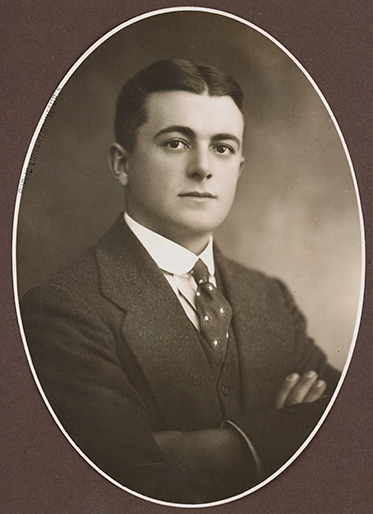
Basil Watson came to my attention when researching the French aviator Maurice Guillaux, who carried the first ‘official’ air mail in Australia, Melbourne to Sydney, in two and a half days (16-18 July 1914). The flight was ‘official’ in the sense that it was supported by the postal authorities, but it was a one-off event and it was many years before air mail became a regular service.
Basil Watson can be credited with making the second ‘official’ air mail in Australia. He flew a total of 1331 postcards, modelled on those carried by Guillaux, from Mount Gambier to Melbourne, over a period of twelve days, 15-27 February, 1917.
I hope his story is of interest.
Booklet ISBN 978-0-9803693-2-8
Tom Lockley, 1 June 2017
Chapter 1. Early life, background- and Harry Hawker
Chapter 2: To England and back.
Chapter 3: The ‘home-built’ aeroplane
Chapter 4: Basil’s display flights
Chapter 1. Early life, background- and Harry Hawker
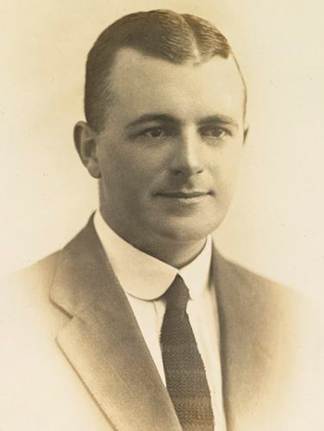 The handsome and elegant
Basil Watson (left) was born at Bendigo on 12 October 1893. He had an older
brother, Leroy, born 1892, and a younger brother, James, born in 1900. His
sister, Venora, was born in 1896, and died in 1982.
The handsome and elegant
Basil Watson (left) was born at Bendigo on 12 October 1893. He had an older
brother, Leroy, born 1892, and a younger brother, James, born in 1900. His
sister, Venora, was born in 1896, and died in 1982.
His family was very wealthy, thanks to their grandfather, James B Watson, a self-made mining magnate: he established gold mines in Bendigo that depended on the extraction of gold from quartz. This began with very simple crushing devices, but quickly became industrialised, leading to huge profits.
James B Watson diversified into grazing and real estate, at which again he was very successful, cashing in on the boom times that followed the gold rush. He was also a partner in the Federal Bank, which has been described by one historian as being 'a device for transferring as much public money as possible into the owners' pockets'. Whatever the truth of this assertion, James B Watson died in 1899 leaving a fortune of over £1 million, plus large amounts of property.
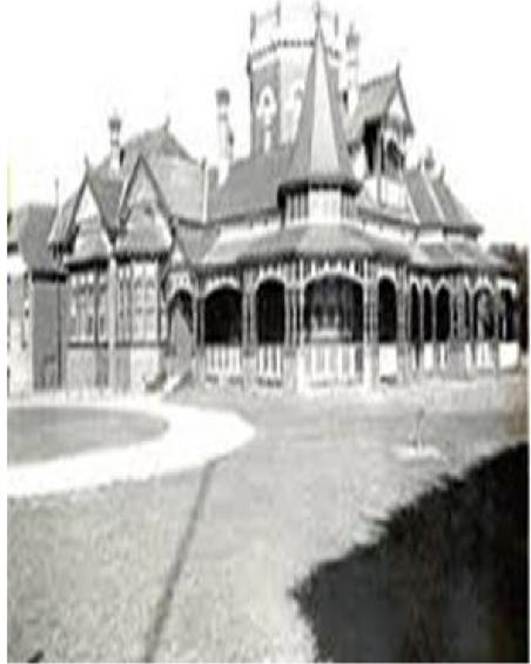 |
His son, Basil's father, had no problems in buying a waterside block of land and building a basically adequate seaside dwelling at Brighton, Melbourne. The huge block of land had gardens, tennis court and golf putting course, with paths down to the waterfront where there was a magnificent boatshed and a well-equipped workshop. The house and land was tended by a large domestic staff.
Basil and his brothers were students at Haileybury College in Brighton, which had opened in 1892 and quickly established a high reputation. It remains one of the most prestigious (and expensive) schools in Melbourne. Basil does not appear to have gone on to university: but like many of his class, he moved on to taking part in the family business.
In September 1909 the Commonwealth Government offered a prize of £5,000 for the construction of a military aircraft in Australia, and, amid considerable enthusiasm, over 30 people submitted entry forms over the next few years. One was from a person surnamed 'Watson' at the Watson family home address, but nothing more was heard of this venture. Basil would have been 16 in 1909; perhaps his father or older brother was also enthusiastic. The £5,000 was never paid.
Basil was working on a family property in New South Wales when he met Harry Hawker, who arrived in Melbourne in January 1914: but to fill in the background to this momentous meeting we must backtrack a little and refresh our memories of the remarkable group of young Australians who became interested in aviation at this time, and notably of Harry Hawker, who was to have a huge influence in Basil's life.
Harry Hawker – and friends
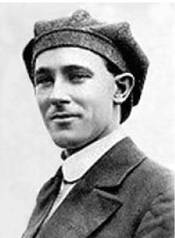
Harry Hawker (1889-1921) was five years older than Basil, and did not have his privileged background. His father was a blacksmith, and he left school at age 12. He became a trainee mechanic at the Melbourne branch of Hall & Warden bicycle depot, and in 1903, at age 14 was certainly road-testing Oldsmobile cars. In 1907 he established his own workshop at Caramut, about 30 km north of Warnambool, Victoria, where he serviced a small fleet of cars owned by the de Little family, owners of Caramut station.
Harry Kauper, a year older than Hawker, was also not from a rich family. His father, an Estonian seaman, arrived in Melbourne in 1877 and worked as a carpenter, and later an orchardist. Harry became a motor engineer, specialising in electrical and ignition systems. Like Harry, his talent and skills were remarkable.
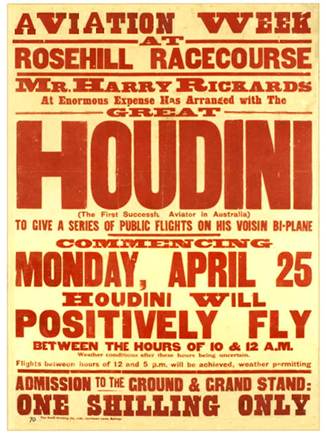 There was certainly
interest in aviation among people like Hawker and Kauper, but in their case the
catalyst for action seems to have been the spectacular pilot Erich Weiss,
better known by his stage name Harry Houdini. The biographies of both suggest
that it was Houdini's activities that inspired them to move to the aviaton
field, and to go to England. (Regardless of whether or not Houdini was the
first person to fly a heavier-than-air aircraft in Australia, he certainly
attracted the crowds. He flew his rather primitive Voisin aircraft on several
occasions, including major displays in Sydney. Movie films of his flights were
sensations throughout the land.)
There was certainly
interest in aviation among people like Hawker and Kauper, but in their case the
catalyst for action seems to have been the spectacular pilot Erich Weiss,
better known by his stage name Harry Houdini. The biographies of both suggest
that it was Houdini's activities that inspired them to move to the aviaton
field, and to go to England. (Regardless of whether or not Houdini was the
first person to fly a heavier-than-air aircraft in Australia, he certainly
attracted the crowds. He flew his rather primitive Voisin aircraft on several
occasions, including major displays in Sydney. Movie films of his flights were
sensations throughout the land.)
Harry, Harry, Harry (and Eric) in England
At the age of 24 in May 1912 Harry Hawker travelled to England with Harry Kauper and another mechanic friend, Harry Busteed. Harry Kauper was employed by T 0 M Sopwith and influenced the firm to hire Harry Hawker. When the Sopwith Aviation Co. was formed in 1913 at Kingston-upon-Thames, Kauper became foreman of works and Hawker chief test pilot. Another Australian who went to England at the same time for the same purpose was Eric Harrison, similarly talented and motivated, who worked for Bristol aircraft.
On 25 August Kauper and Hawker attempted to win the £5000 prize offered by the Daily Mail seaplane flight around the British coast. This was not successful but the pair were awarded a special prize of £1000 for making the best effort.
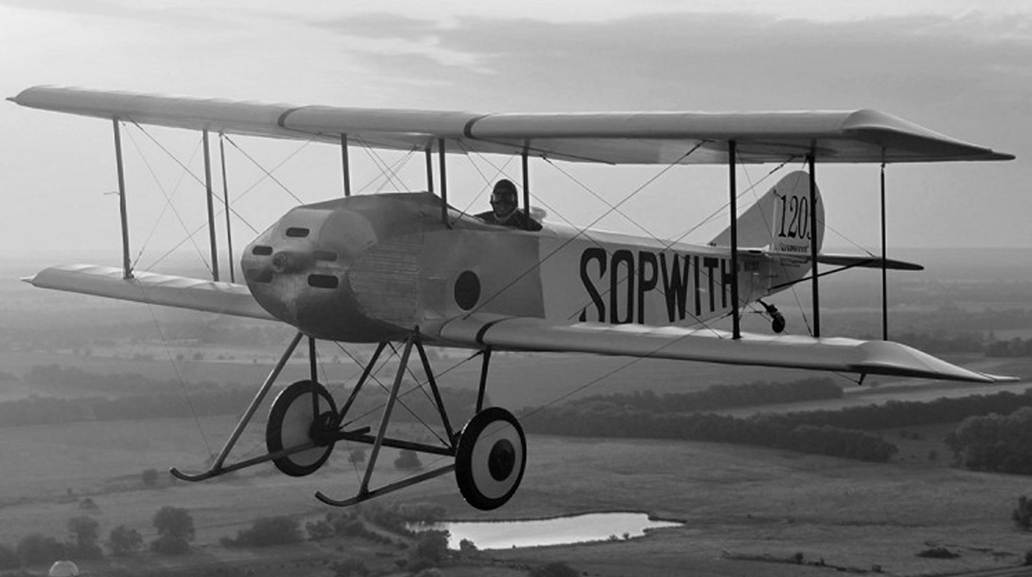
Sopwith's head designer, Fred Sigrist, late in 1913, developed a revolutionary new aircraft, the Tabloid. A tractor biplane, it set the pattern for future development. It is hard to nominate another aircraft that was such an advance on all its contemporaries.
A seaplane version, the Sopwith Schneider, won the second Schneider trophy competition in 1914: this aircraft was nearly twice as fast as the 1913 winner.
Meanwhile, back at Point Cook
On 3 November 1910 the government began to work towards the development of a military aviation capability.
However it was not until 1 March 1914 that the first military flight was made in Australia when Eric Harrison flew a Bristol Boxkite at Point Cook. A strongly held view was that Australia had no need of aircraft, and certainly that fast aircraft were an unaffordable luxury.
Sopwith announced plans for Hawker and Kauper to come to Australia to demonstrate the Sopwith Tabloid. It has been claimed that the arrival of this expedition motivated the army to get the Central Flying School at Point Cook 'up and running': whether that is true or not, Hawker and Kauper had arrived in mid-January, and remained in Australia until May 6. One of the first people to be associated with him was Basil Watson, and, as we will see, 'the rest is history'.
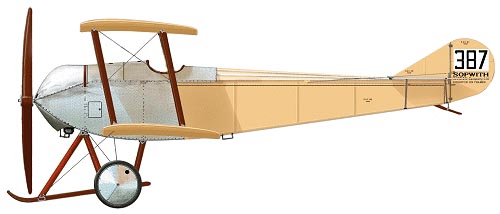
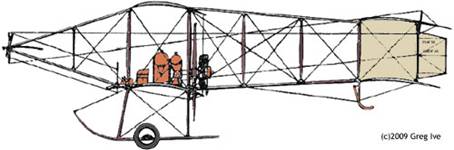
The Tabloid (right) is obviously hugely more advanced than the Boxkite. Drawings are (very) approximately to scale.
Chapter 2: To England and back.
Hawker in Australia
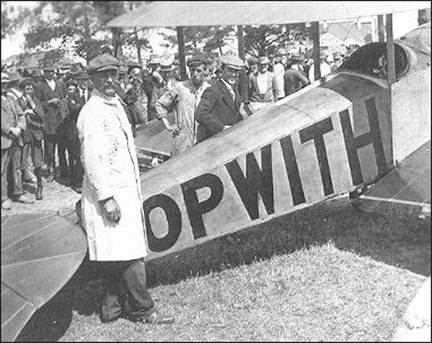 Hawker and Kauper arrived in
Australia on 20 January 1914 and after a brief trip to Adelaide, Hawker began
flights. The aircraft was based in New Street, Elsternwick, and took off from
the street itself. On 3 February Hawker made a spectacular fly-in visit to
Government House in Melbourne, the residence of the Governor-General in these
pre-Canberra times.
Hawker and Kauper arrived in
Australia on 20 January 1914 and after a brief trip to Adelaide, Hawker began
flights. The aircraft was based in New Street, Elsternwick, and took off from
the street itself. On 3 February Hawker made a spectacular fly-in visit to
Government House in Melbourne, the residence of the Governor-General in these
pre-Canberra times.
The following Saturday (7 February) Hawker gave his first major display at Caulfield racecourse. The Governor-General attended, and there were aerobatic displays and some flights with passengers – some ladies and also one Basil Watson. The magazine Punch (not always reliable) said that Hawker earnt £1,000 on this day. Punch also satirised the situation as regards the delays in getting the Central Flying School into operation. On 13 February Miss Cole, daughter of E W Cole, famous for his Funny Picture Book, went for a flight.
A few days later Senator Millen, the Secretary for Defence, was taken for a flight. Hawker was quoted as saying that the CFS aircraft were ‘useless’, and obviously he continued to lobby for the acceptance of his far more advanced aircraft.
Hawker gave displays at Victoria Park, Sydney, in late February, then headed south. A display in Albury was curtailed by damage caused to the aircraft in landing on 6 March. After repairs, Hawker flew from Melbourne to Bendigo for another display, but a mishap on the ground also caused problems here. Nevertheless the whole tour was a triumph, with wide newspaper coverage, particularly of the passenger flights and the aerobatics.
During April, the government made it clear that there would be no purchase of the Sopwith. The older, slower machines would suffice. On 5 May Hawker, Kauper and Basil Watson left for England. The departure, and the presence of Basil Watson, was widely reported.
In England
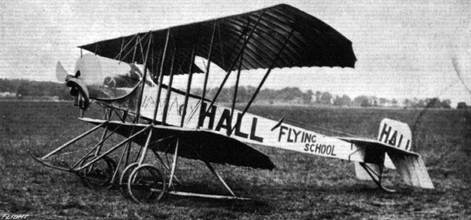 Basil was immediately employed in the
Sopwith factory. On September 2 1914 he began flying training with the Hall
Flying School at Hendon. The Hall school was
one of three or four such establishments at Hendon. The standard fee of £100
was discounted to £75, and there is evidence that he had previously gained at
least some air experience at Sopwith, which might explain this.
Basil was immediately employed in the
Sopwith factory. On September 2 1914 he began flying training with the Hall
Flying School at Hendon. The Hall school was
one of three or four such establishments at Hendon. The standard fee of £100
was discounted to £75, and there is evidence that he had previously gained at
least some air experience at Sopwith, which might explain this.
At about the time that Basil was learning to fly, the school introduced its ‘Hall Biplane’ trainer. Surprisingly little information is readily available about this aircraft: it was known as ‘a Caudron with a fuselage’, possibly modified from a 1912 Caudron as owned by the flying school, and seems to have been adequate for the task.
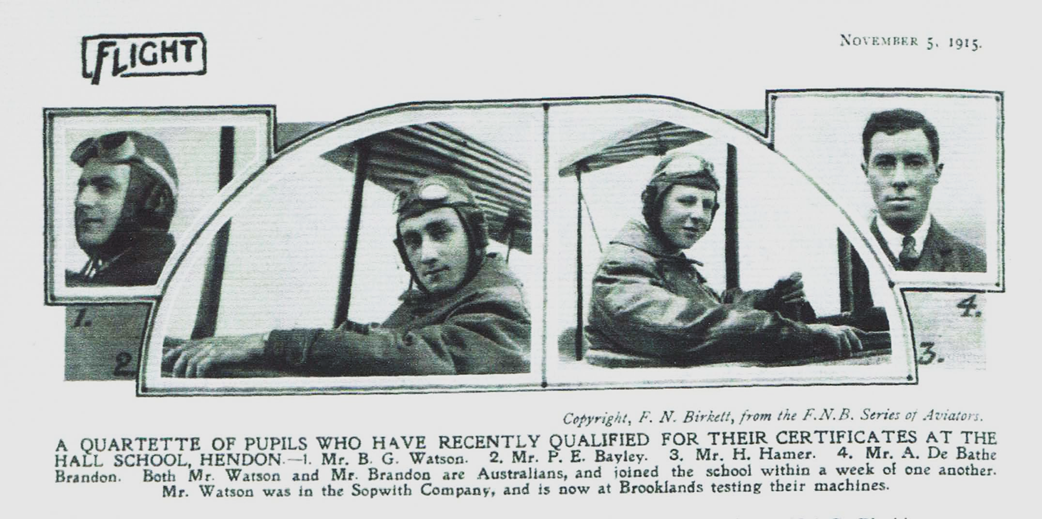
At this time Flight magazine was running a weekly feature on the activities of the flying schools, and we read that Mr B. G. Watson and A. de Bathe Brandon, a New Zealander, progressed from doing straight flights and circuits to doing figures of eight and right and left-hand turns, and ‘practising vol plane landings, previously to qualifying for their brevets on 18 October 1914’. Basil was about the 38th Australian to become an officially qualified pilot. De Bathe Brandon had a distinguished war career, and became a lawyer in New Zealand, dying in 1974.
Australian sources clearly
indicate that Basil was a test pilot for Sopwith, being careful to explain that
this was a very dangerous occupation, and by no means an indication of
unwillingness on Basil’s part to participate in the fighting. This is valid:
expert pilots were indeed in short supply and it was vital to use them in
manufacture. When, in 1959, a Sopwith / Hawker reunion was held, the chairman
singled out seven test pilots for special mention, including Neville Duke,
Harry Hawker and Basil Watson, even though Basil’s career with Sopwith was
dramatically curtailed.
The Crash
A direct quote from the May/June 1976 AHSA Journal, provided by Keith White, which in turn drew on Basil G Watson – Pioneer Aviator, a booklet by Nelson Eustis:
On 22 June, 1915, Watson took off from the airfield at Brooklands in a Sopwith biplane fitted with a 150 hp eight-cylinder Sunbeam engine. He was travelling at 90 m.p.h. when the engine seized and from a height of 150 feet he had to choose between hitting a house or a tree in the ensuing forced landing. He chose the tree, its 12 inch trunk being sheared off by the force of the impact. The biplane finished as a pile of wreckage 40 feet away. Basil Watson was fortunate to survive. escaping with severe concussion, cuts to the face and legs, in addition to a gaping five inch wound in his head. It was said to be one of the most miraculous escapes of the war-time, 10. The press of the day was giving much publicity to the race to crashes at Brooklands - and there were plenty. When the Sopwith struck the tree, the fuel tank burst, but the aircraft did not catch fire. Had it done so there would have been little likelihood of Watson being rescued. However, Watson's duties as a test pilot had come to an end.
Back to Australia
After a long convalescence, Basil returned to Australia, arriving in Hobart early in June 1916, where he was interviewed by the Hobart Mercury. There are a few minor errors of fact in this report, but Basil had some interesting things to say. He presented as a modest yet assertive young man, and described his work at Sopwith. He gave patriotic praise for the British military aircraft, which at the time were actually having some combat difficulties against higher performance enemy aircraft. He supported the opinions of Pemberton Billing, the founder of Supermarine, who was critical of the unimaginative conduct of the air war and wanted the air arm to have higher priority and more autonomy.
He showed off a barograph, used for recording altitude, so it is clear that he brought at least some aircraft parts with him. He described the exhilaration of flying, and discussed his crash, which had left his skull badly damaged. He described Zeppelin raids that he had witnessed, and talked of the possibility of sending large bombing fleets to destroy German war industry.
Finally, he announced his plans to build an aircraft in Australia. He planned to give spectacular aerobatic displays throughout the country, and was looking forward to setting a new Melbourne – Sydney record of about seven hours.
Chapter 3: The ‘home-built’ aeroplane
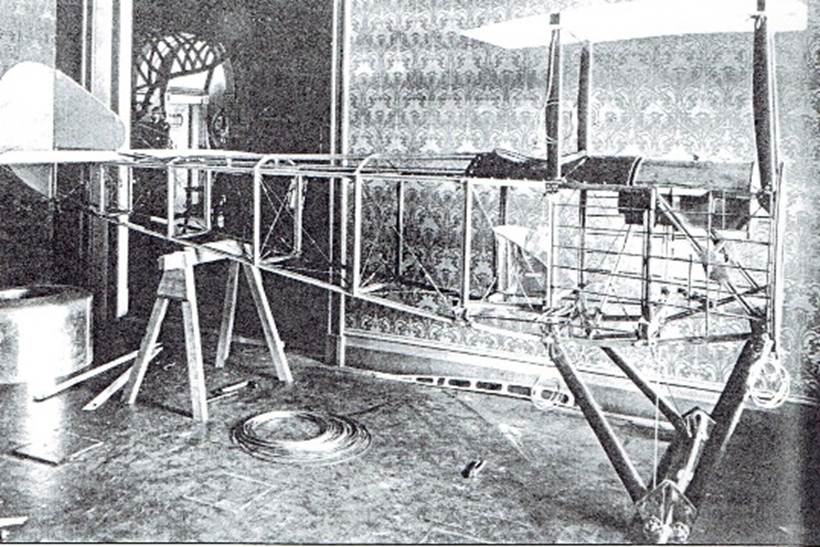
(Most of the material in this section comes directly from Keith Megg’s magnificent book Australian-Built Aircraft, and the Industry (page 124-6) and direct quotes are in italics. Supplementary material comes from the AHSA journal of May/June 1976, some Trove items and other material from Alan Campbell and Keith White).
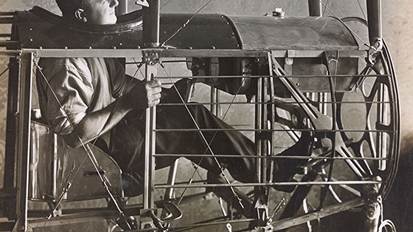 During the war, peacetime
aviation in Australia was not encouraged. There were restrictions on importing
technical equipment and probably it was due to his father’s influence, and the
fact that the aircraft would be used for patriotic displays and to raise money
for worthy wartime causes, that Basil was allowed to construct his aircraft. He
began the construction of his aircraft, with the assistance of his younger
brother Jim, a few weeks after his arrival, ie mid-June 1916. The billiard room
of his father’s mansion ‘Foilacleugh’ was taken over for the purpose, and
indeed a wall had to be demolished to enable the aircraft to be removed when
complete.
During the war, peacetime
aviation in Australia was not encouraged. There were restrictions on importing
technical equipment and probably it was due to his father’s influence, and the
fact that the aircraft would be used for patriotic displays and to raise money
for worthy wartime causes, that Basil was allowed to construct his aircraft. He
began the construction of his aircraft, with the assistance of his younger
brother Jim, a few weeks after his arrival, ie mid-June 1916. The billiard room
of his father’s mansion ‘Foilacleugh’ was taken over for the purpose, and
indeed a wall had to be demolished to enable the aircraft to be removed when
complete.
The
newspapers proclaimed that the aircraft was his own design, but it is obvious
that this was not so. The aircraft was based on a so-called Hawker ‘runabout’ of
which about five were built in 1915, serving as precursors of the Sopwith Pup,
which first flew in March 1916. 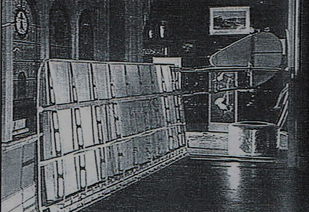 Basil almost certainly brought a set
of drawings with him. Though some metal parts certainly were made locally, many
specialist components were probably imported, and certainly on his arrival
Basil showed a reporter a barograph and an airspeed meter that he had brought
from England (see page 11). Some
other parts arrived during the building process, according to family
recollections in 1967.
Basil almost certainly brought a set
of drawings with him. Though some metal parts certainly were made locally, many
specialist components were probably imported, and certainly on his arrival
Basil showed a reporter a barograph and an airspeed meter that he had brought
from England (see page 11). Some
other parts arrived during the building process, according to family
recollections in 1967.
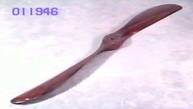
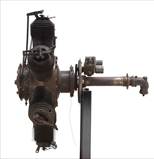
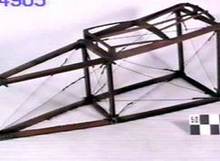 Locally
sourced wood was used. Basil is quoted as saying
that Australian timber was the best in the world for this purpose. Certainly
Tasmanian Ash, Tasmanian Blackwood and Queensland Maple were used, though
various sources quote different wood types used for such things as the propeller.
A section of the wooden frame and a propeller as well as the engine are
preserved in the Museums Victoria collections: the pictures are from the
Museums Victoria website.
Locally
sourced wood was used. Basil is quoted as saying
that Australian timber was the best in the world for this purpose. Certainly
Tasmanian Ash, Tasmanian Blackwood and Queensland Maple were used, though
various sources quote different wood types used for such things as the propeller.
A section of the wooden frame and a propeller as well as the engine are
preserved in the Museums Victoria collections: the pictures are from the
Museums Victoria website.
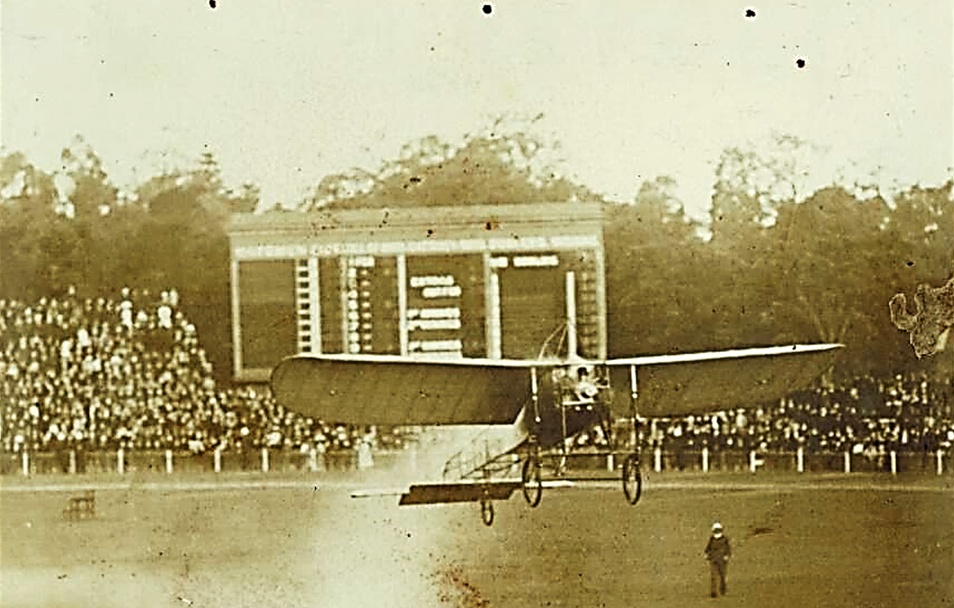
While some accounts say that an engine was imported from
England, the 50hp Gnome rotary was purchased from pioneer airman Horrie Miller,
and came originally from the Bleriot of Gaston Cugnet, who was mainly noted for
crashing on take-off from the Melbourne Cricket Ground on December 3 1910.
(above). Horrie Miller
had used it in his own aircraft, built and successfully flown in mid-1916, but
he had departed for Europe and the plane was no longer used.
There were no ailerons on the wings, as were seen on the Pup. The aircraft was controlled by wing warping, like the Tabloid. The aircraft was slightly longer than the Pup, and seems to have been designed from the outset to be capable of carrying two people. Undercarriage components were wooden rather than metal. Another interesting variation was the omission of inboard interplane bracing struts, which typically controlled wing stagger and incidence, enabling easy adjustment. Rigidity was maintained by the use of steel bracing wires for the centre-section, and stranded cables for the outer wings. The large elevators were fairly standard, and the rudder was typical of the early Sopwith aircraft.
 |
The wings were of double-cambered section with two spindled-solid-spars and two compression struts per unit, while the ribs were cut from thin ply sheet, and reinforced with spruce flanges……. The method of attachment of the upper wings appeared to be rather questionable — a female metal fitting at each end of the two centre-section spars mated with a corresponding male member at the wing spars, with what appears to be a single fore-and-aft rod pushed through from the leading edge to pin them together…………... (but it is possible that this statement is a matter of being wise after the event, because Basil’s fatal crash was caused by wing failure). The rear flying and landing wires were one piece, from interplane strut to interplane strut, across the centre-section.
The fuselage was basically a rectangular wooden frame in which Tasmanian blackwood and mountain ash were used, with wire bracing adjustable by turnbuckles. Wooden formers and stringers gave shape to the upper rear fuselage, and also tapered it from the circular engine bulkhead to the rectangular section in the plane of the rear centre-section strut. No windscreen was fitted. The 21-gallon fuel tank was located above and behind the engine, and fuel was gravity fed into the carburettor, thence via the obdurator ring into the crankcase.
A wooden-V full-axle type main undercarriage with rubber-cord shock absorbers and metal disc-covered wheels was used, while the tailskid was a wooden 'hockey stick' pivoted on the lower stern-post extremity.
Basil’s aircraft had only a 50hp engine whereas the Pup with Le Rhone engine had 80 hp, but Basil’s plane had no armament and was about 180 pounds lighter, weighing only 616 pounds. Basil’s aircraft had a wingspan of 26 feet, length of 18 feet and wing area of 220 square feet, fractionally smaller than the Tabloid.
The Pup was slightly larger still (span 23’ 6”, length 19’ 3” and wing area 254 square feet, weighing 787 pounds unladen). So Basil’s plane was a fairly ‘hot’ machine, in advance of CFS aircraft of the time.
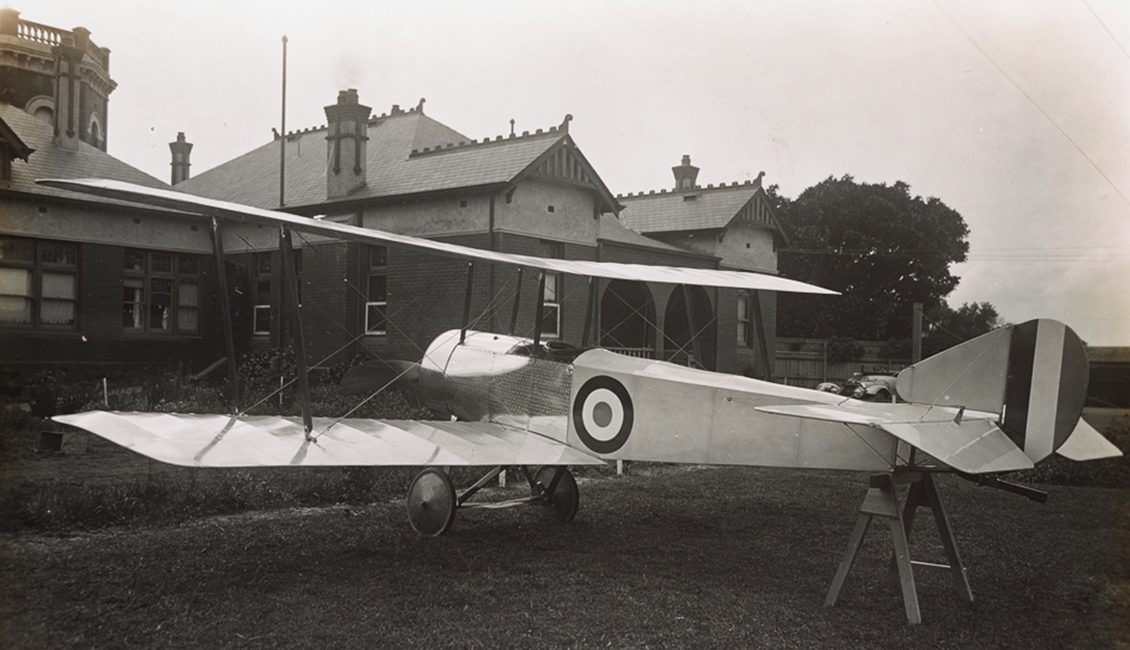
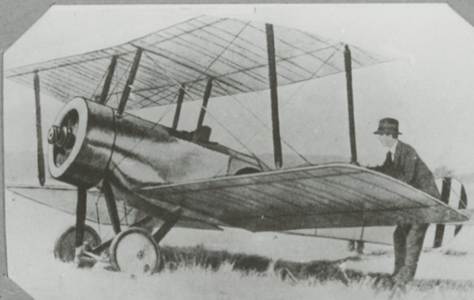
From the photos available, workmanship appears to be of a very high order and the final product looked good. Apart from the polished cowlings, the aircraft was painted white, with military cockades on the fuselage, and stripes on the rudder. It is seen below in the grounds of Foilacleugh.
Total cost was £1,700, provided in general by Watson’ father.
The aircraft was taken to Point Cook for testing — a first short flight was made by Basil Watson on 28 October 1916. Following some adjustments and modification, a 45-minute flight was made on 30 October, during which Watson 'climbed to 5,000ft, turned head down in a nose dive of 2,000ft, made two perfect loops, and gave spectators a magnificent exhibition of flying,' according to a contemporary newspaper account.
The stage was set for the display flights that were to
occupy the next five months
Chapter 4: Basil’s display flights
(Nelson Eustis’ little booklet, Basil G.Watson, Pioneer Airman, 1967, and a small book Basil Watson, Pioneer Aviator, 2014, by Carole Watson, a family member, have been the main sources for this section. Other material comes from Trove. This chapter covers the period from 29 November 1916 to the end of the mail flight.)
Bendigo display
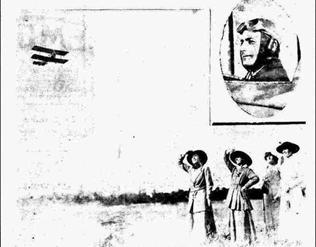 Major
test flights had continued at Point Cook during November. It was claimed that
his aircraft was not much slower than the Bristol fighter that was the RAAF’s
fastest machine despite the fact that his aircraft had only a 50 horsepower
engine whereas the Bristol had 100 horsepower.
Major
test flights had continued at Point Cook during November. It was claimed that
his aircraft was not much slower than the Bristol fighter that was the RAAF’s
fastest machine despite the fact that his aircraft had only a 50 horsepower
engine whereas the Bristol had 100 horsepower.
Illustration from the Bendigo News
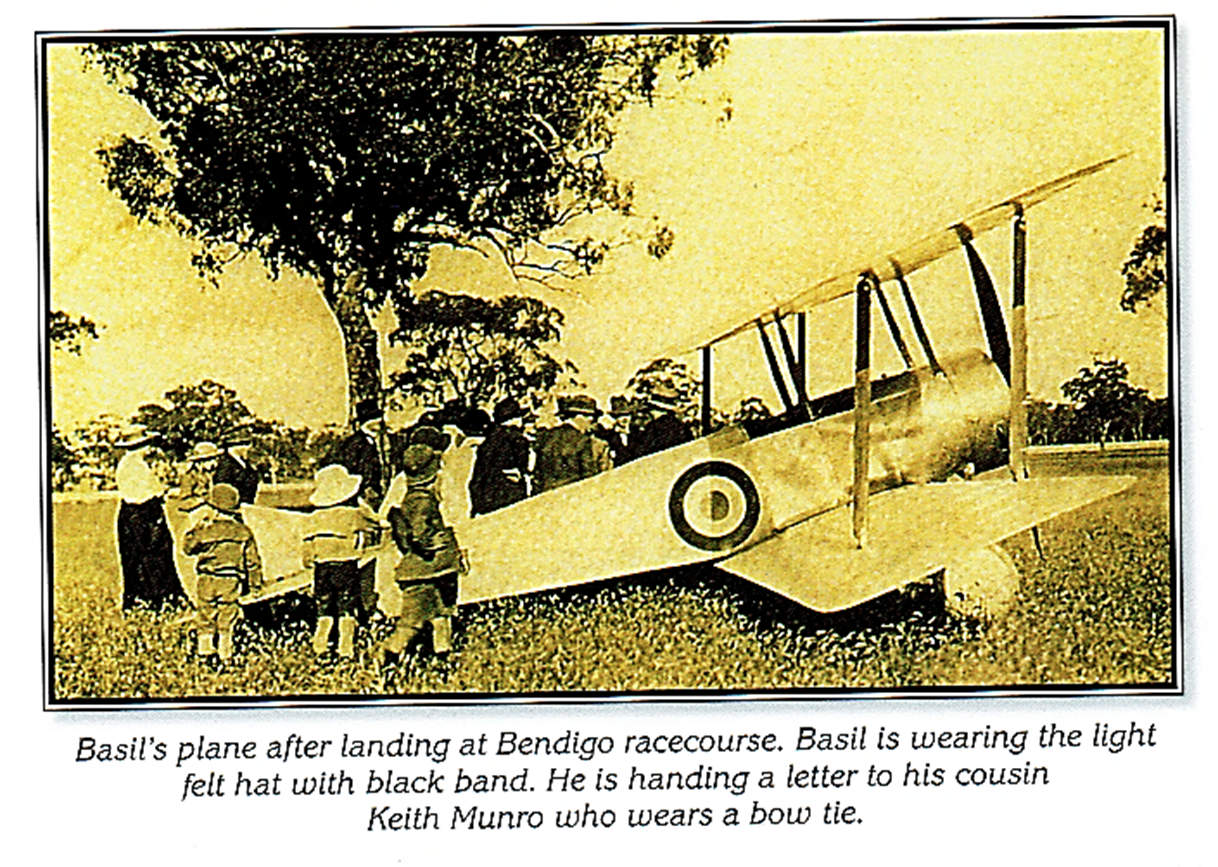
Picture from
Carole Winter’s book.
On Wednesday 29 November he flew directly to Bendigo, the flight being claimed as the longest flight undertaken to that time. He was welcomed as a member of the family of ‘one of the pioneers of the gold field’. A planned display on 2 December was cancelled due to rain, but on 9 December the local newspaper duly printed the picture on the left and reported that Mr. Basil G. Watson, a Bendigo native now residing with his parents at Middle Brighton, gave a splendid exhibition of aviation on Epsom racecourse, Bendigo, on Saturday, the proceeds being devoted to the fund for providing comforts for men of the 2nd Brigade, A.I.F., who are now on active service at the front. There was a large, enthusiastic audience, but unfortunately when he was scarcely half through his performance his engine 'cut out,' owing to one of the petrol tubes becoming blocked, and the aviator was compelled to descend. He glided (‘volplaned’) 2,000 feet, and reached the landing ground, but the aircraft hit a bump on landing and the propeller was smashed, and other damage done to the wing struts and framework. Basil was uninjured and began to repair the machine. It appears that various types of wood were used to make propellers and maybe Basil experimented with a new timber here.
On Friday 15 December: he took off from Bendigo racecourse at 2 26 pm and after a twenty minute display over the town turned south, ‘to the accompaniment of much cheering from- the citizens and the school children, who were released from school duty in honour of the occasion’. These flights still were widely reported – Basil stated that over Macedon he was temporarily lost in fog at 9,000 feet and had to descend to 3,000 feet, and ‘thenceforward his trip was extremely enjoyable’ despite another little disorientation over Flemington before landing at Point Cook. He carried a letter from the Mayor of Bendigo to the Mayor of Melbourne, which he delivered later in the day.
 On
Monday 18 December Basil gave a major press interview. He talked of new
machines that could fly at 140 miles an hour, and particularly mentioned the
aeroplane’s ability to find and attack submarines, which were then the main
menace to Britain. His next engagement was at Aspendale on 30 December and at
Castlemaine on New Year’s Day but the displays had to be cancelled because of
engine problems.
On
Monday 18 December Basil gave a major press interview. He talked of new
machines that could fly at 140 miles an hour, and particularly mentioned the
aeroplane’s ability to find and attack submarines, which were then the main
menace to Britain. His next engagement was at Aspendale on 30 December and at
Castlemaine on New Year’s Day but the displays had to be cancelled because of
engine problems.
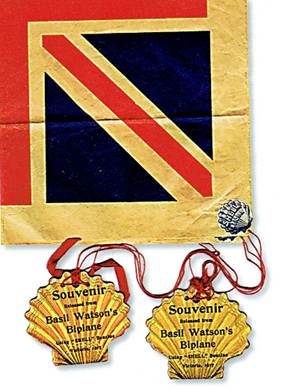
Souvenirs dropped by Watson at displays – advertising Shell petrol
Enter Albert Sculthorpe.
 By
17 January Albert Sculthorpe, who had provided management services to other
aviators such as Harry Hawker and Maurice Guillaux, was involved with Basil,
listed as Director. His associate, Mr R Sissons, ‘Manager’, did much of the
work. It was rumoured that Sculthorpe took half of the gate takings, but he
certainly, for Guillaux at least, did an excellent job of negotiating with the
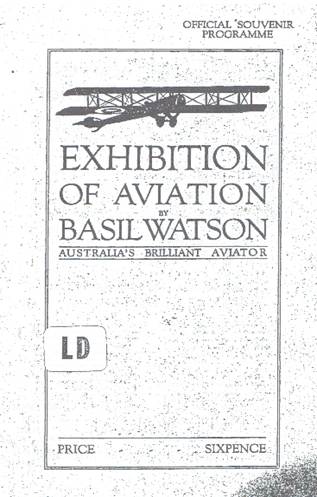
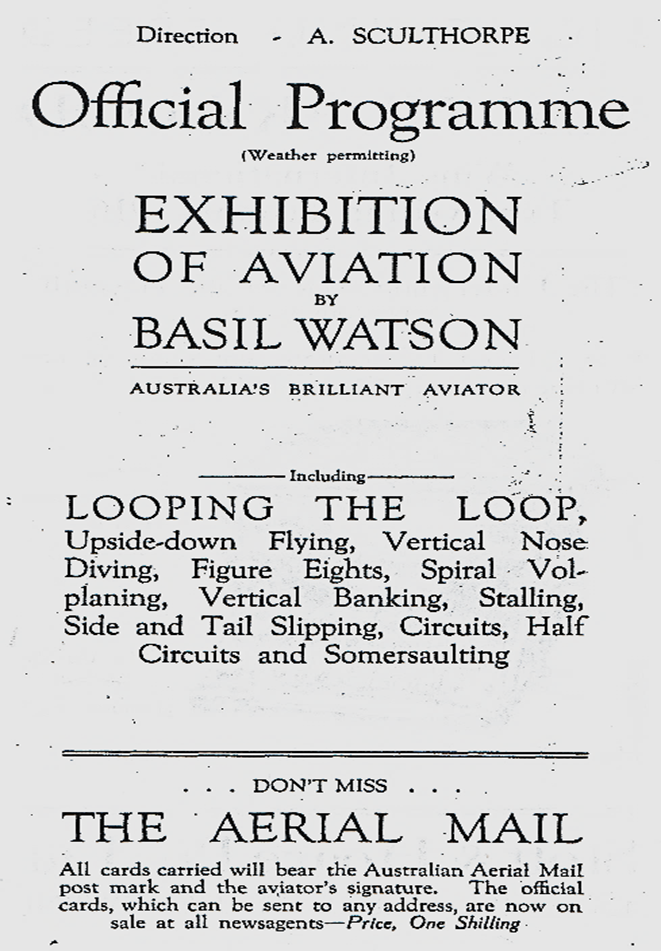
locals for every performance. For Basil, he prepared a program booklet of
twelve pages, including a title page , a biography and full-page advertisements
for typewriters, Shell petrol, coffee and other glamourous items,
By
17 January Albert Sculthorpe, who had provided management services to other
aviators such as Harry Hawker and Maurice Guillaux, was involved with Basil,
listed as Director. His associate, Mr R Sissons, ‘Manager’, did much of the
work. It was rumoured that Sculthorpe took half of the gate takings, but he
certainly, for Guillaux at least, did an excellent job of negotiating with the
locals for every performance. For Basil, he prepared a program booklet of
twelve pages, including a title page , a biography and full-page advertisements
for typewriters, Shell petrol, coffee and other glamourous items,
Sculthorpe was a Councillor from Saint Kilda and owned a cinema. One of his specialties was local newsreels, taken often by a rather shady character called Mr Kyrle. Some were taken of Guillaux and Watson, but unfortunately none have survived. Sculthorpe, however, and was widely known and respected: when he visited Albury with Guillaux in 1914, he addressed the local council, and this visit was regarded as a great honour.
The displays in Western Victoria
Basil flew to Warnambool on January 24, being enthusiastically farewelled by Point Cook staff, with whom he was obviously very popular. This was the longest non-stop flight to date in Australia
 Basil’s
aircraft was the first to be seen in Warnambool, then a wealthy pastoral
district, and Sculthorpe ensured that the flight was well publicised, with
glowing accounts of Basil’s exploits so far in the local papers. On 31 January
the aircraft was damaged when its temporary shed was damaged in a storm, but
the damage was minor and easily repaired.
Basil’s
aircraft was the first to be seen in Warnambool, then a wealthy pastoral
district, and Sculthorpe ensured that the flight was well publicised, with
glowing accounts of Basil’s exploits so far in the local papers. On 31 January
the aircraft was damaged when its temporary shed was damaged in a storm, but
the damage was minor and easily repaired.
On 3 February he was farewelled by the Mayor of Warnambool and flew to Hamilton, where he gave a display.
At Hamilton the weather was very bad, with high winds. Basil took off from the showground safely and gave a 25 minute display. After climbing to 4000 feet, he dived and demonstrated rolls and sideslips. He climbed perpendicularly, and ‘the force of the wind could be demonstrated by the vast difference in speed when flying with the wind as opposed to flying against it’. Special trains ran from Terang and Port Fairy, and other timetables were altered to facilitate travel. This was typical of the shows, also performed at Casterton and on February i4 at Mount Gambier, though this show was marred by rain and low cloud. There was also no display at Camperdown because of low cloud.
The Experimental Air Mail
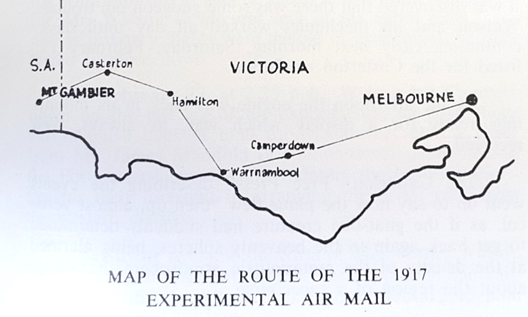
During February, as
he visited the various towns, specially printed postcards were on sale for one
shilling each. These were modelled on those carried by Maurice Guillaux as
organised by Sissons. Over 2000 were printed.
The route was as per the map (which is from Nelson Eustis’ booklet), but altogether the flight took twelve days.
The last leg occurred on Tuesday 27 February when he flew from Camperdown, 120 miles west of Melbourne, to Middle Park, three kilometres south of central Melbourne. The flight took an hour and twenty minutes including some aerobatics over Geelong and Point Cook.
The letters were handed over to the Deputy Postmaster-General (Mr Bright).
Chapter 5: End of the story
Great expectations…….
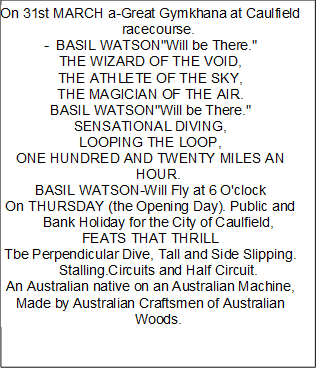 A greatly shortened
version of an advertisement in the Argus on 27 March 2017..
A greatly shortened
version of an advertisement in the Argus on 27 March 2017..
At
the end of the mail flight, the future looked rosy. Basil was the hero of the
hour. Movie pictures taken by Sculthorpe’s team were shown, to wild acclaim.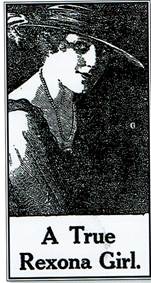
Throughout Victoria there were plans for new ventures along the lines of the successful visits to the west. Particularly, the inhabitants of Mildura, Maryborough, Daylesford and Nhill were looking forward to early visits. He spoke of flying from Melbourne to Sydney in one day, with a flying time of about six hours. He said he had plans for building a second aircraft in Australia, and was a great advocate of local construction of aircraft, saying that Australian timbers were eminently suitable for the purpose. He was also engaged to ‘the beautiful singer and actress Miss Noel Geddes’. As well as being the ‘true Rexona girl’ she was a member of a group called ‘The Girls who Stayed at Home’ which made large amounts of money for wartime charities.
Most of March was taken up with overhauling the aircraft, notably in replacing worn fabric. Carole Wynter states that ninety yards of silk were used, at 10 shillings and sixpence a yard. When all was in order, the aircraft was prepared for flight.
….. followed by disaster,
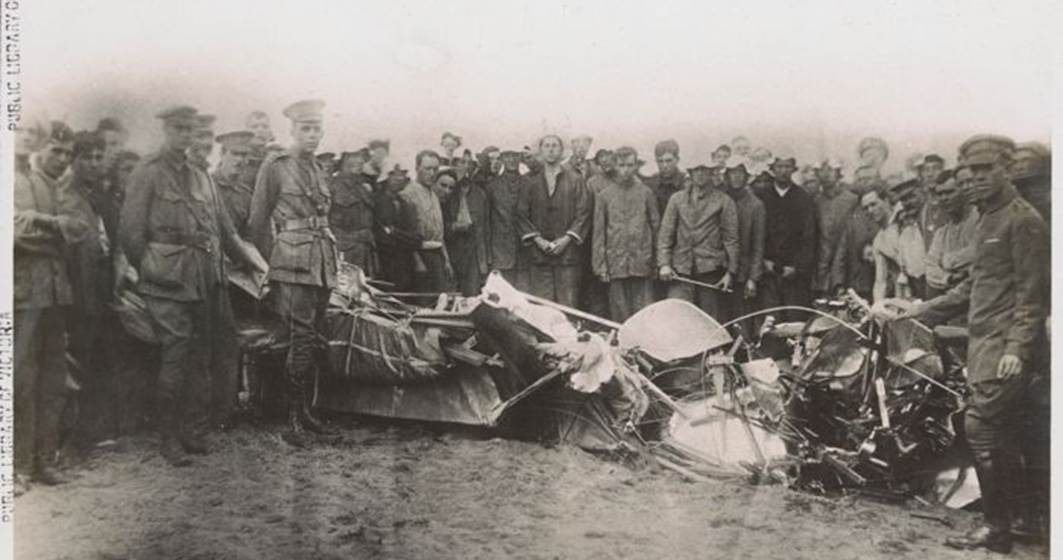
At about 3 30 pm on 29
March Basil took off from Albert Park and gave the aircraft a thorough workout
over the area, with several loops and high-speed dives and turns. He then set
course for Point Cook, only about ten miles away, flying directly across Port
Phillip Bay. When he flew over the AIF camp near Point Cook, he gave another
impromptu flying display. The Australasian said that he descended from
3000 feet to 2000 feet, and made two loops. He then entered a vertical bank,
possibly preparatory to another loop when the watchers at the flying school the
left wing collapsed, shortly followed by the right wing. The aircraft dived
vertically, and very quickly, and in a few seconds crashed into about three
feet of water, about 50 yards from the shore, near a group of soldiers swimming
in the area. Within a few seconds, the soldiers reached the crash site, but he
was clearly dead. This was confirmed by the camp doctor, who arrived a few
minutes later.
His funeral was held on Sunday afternoon, 1 April 1917. After a religious service at the family home, the cortege proceeded to Boroondara Cemetery, Kew, with an honour guard of Australian Flying Corps, whose senior officers were pall-bearers. There was a huge crowd and many elaborate floral tributes. Including a huge wreath in the form of an aircraft. During the funeral the same fire bell that had tolled in rejoicing to announce his arrival for the mail flight tolled again to demonstrate sorrow.
At an inquest finalised over three weeks later, Basil’s father put the blame on a wire supporting the wings. It had a screw eye on the end, which had given way. He said that if the wire had been attached directly to the built-in lug, it would not have failed. This was supported by other experts and a verdict of accidental death was returned.
Philately
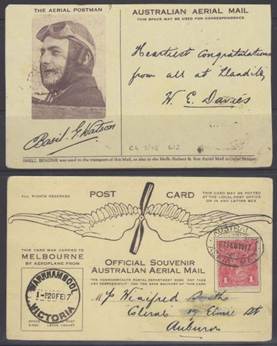
The 1917 mail run carried 1331postcards, modelled on those carried by Guillaux. 371 came from Mount Gambier, 269 from Casterton, 299 from Hamilton and 66 from Camperdown. Six were sold at an auction in 2015 for prices from $260 to $330, and later sales have been considerably higher. An original Warnambool display program, signed by Basil’s parents, sold for $230.
 |
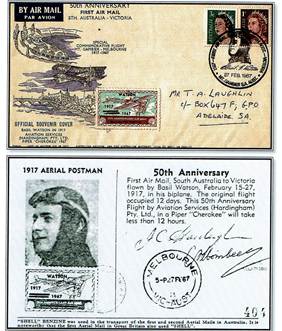
 On
29 October 1967 a commemoration flight occurred. Piper Cherokee VH-PYZ,
belonging to Aviation Services of Parafield, South Australia, was flown by John
Hardingham over the airmail route. The flight took four and a half hours. For
this flight at least two special items were produced, as pictured (from Carole
Wynter’s book). The ‘Cinderella’ on the upper envelope is an overprinted 1964
Guillaux commemorative.
On
29 October 1967 a commemoration flight occurred. Piper Cherokee VH-PYZ,
belonging to Aviation Services of Parafield, South Australia, was flown by John
Hardingham over the airmail route. The flight took four and a half hours. For
this flight at least two special items were produced, as pictured (from Carole
Wynter’s book). The ‘Cinderella’ on the upper envelope is an overprinted 1964
Guillaux commemorative.
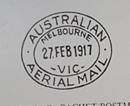
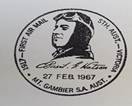
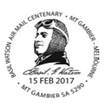 A special cancellation imprint was
placed on the original mail, (left), and another was produced for the 1967
re-enactment (centre). This was revived for one day only in 2017 (right).
A special cancellation imprint was
placed on the original mail, (left), and another was produced for the 1967
re-enactment (centre). This was revived for one day only in 2017 (right).
The last word
On December 2, 1959, at a major celebration dinner, special mention was made of seven test pilots who had been prominent in the development of the Sopwith aircraft company and its successor, Hawker. Among such famous pilots as Hawker himself, George Bulmer, the leading test pilot of the1930s and Neville Duke, the leading test pilot of the 1950s and 1960s, Basil Watson was mentioned, even though his career at Hawker was so brief.
This underlines his obvious qualities as an aviator. He was also obviously a good technician and engineer, with tremendous drive and initiative. He died at the age of 23. It is interesting to speculate on what might have happened if he had been given another half a century of life.
As it is, he certainly packed a lot into his short life, and is a significant, and underrated, figure in Australian aviation history.
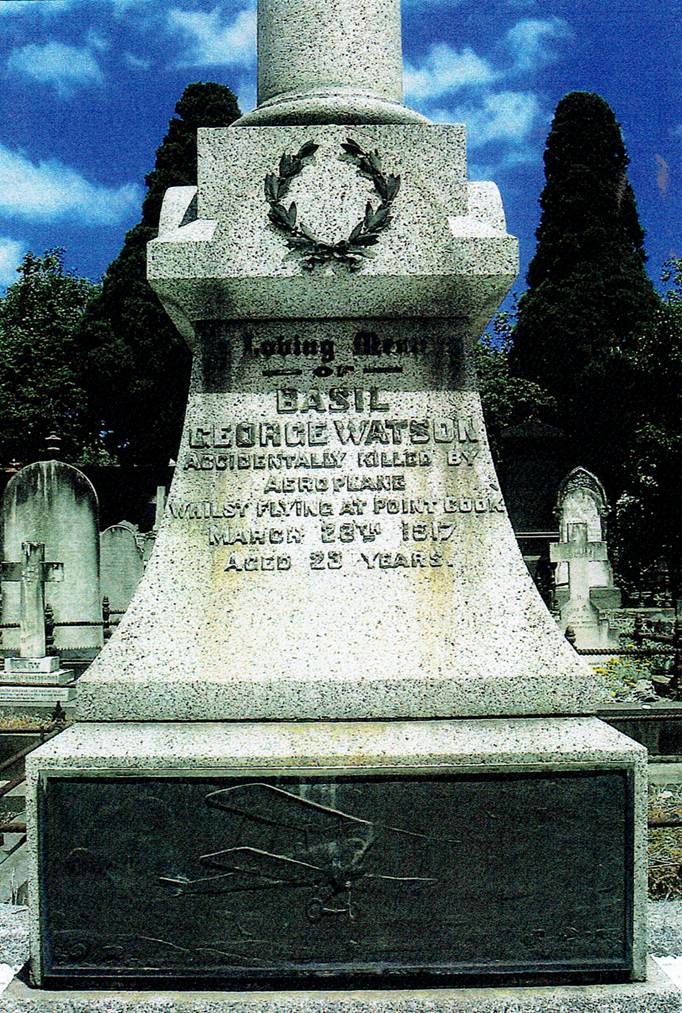
He is buried in
Boroondara cemetery, in Kew, Victoria. This photo is from Carole Wynter’s book.